
POST Retailers and cashlessness

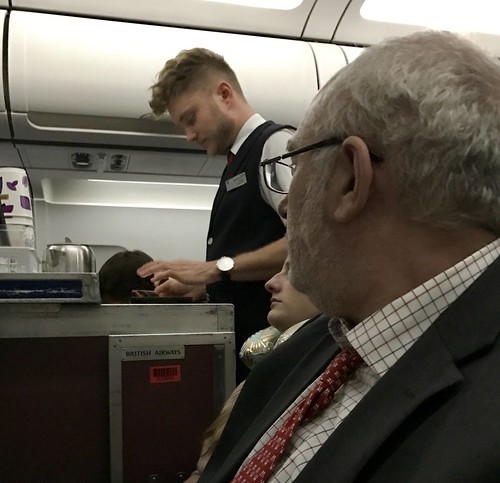
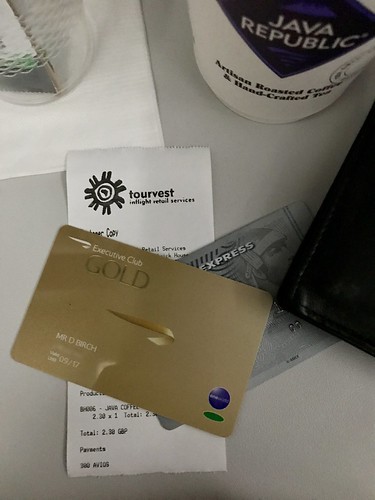
British Airways have instituted a new policy of annoying customers like me by making them pay for coffee. Although, to be fair, it was Marks & Spencer coffee and it was much nicer than the usual BA coffee. Naturally they didn't take cash.
Avios are the New Money

They are not unusual in the respect. Lots of airlines don’t take cash. What a nightmare it would be to try and manage cash on board a plane.  Time-consuming and pointless. Of course, it’s time-consuming and pointless in other retailers too. Perry Kramer, vice president and practice lead at consultant Boston Retail Partners, contends that as many as four-fifths  of retailers today are already largely cashless.

“Retailers don’t really want to be banks. It’s not their sweet spot,” he says. “It is much less expensive to process credit and debit than it is cash, because cash has a lot of labor involved.”

From Cashing In or Cashing Out? | National Retail Federation

Indeed it does. And that labour might be more profitably redeployed doing something more useful to the business, such as serving customers.

The company says that employees can perform 5% to 15% more transactions every hour when they don’t have to handle money.

From Sweetgreen Is Going Fully Cashless In 2017 | Fast Company | Business + Innovation

Those are pretty substantial savings. I’ve often wondered why places like Pret, places that have multiple points-of-service, don’t already have cash-only lanes because it’s noticeably faster to “tap and go” (even if you have to stand around waiting for the checkout clerk to light up the terminal and for the super-slow printer to chunter out a receipt) than it is to hand over a fiver and wait for change. Of course, what would be faster still is to not use anything at all.

The move away from cash might also steer more people onto the Sweetgreen app. Over the last year, app use has grown 95%, says the company. Roughly a third of the business is run through the app

From Sweetgreen Is Going Fully Cashless In 2017 | Fast Company | Business + Innovation

The apps are getting smarter too. For a retailers, it must be much more attractive to have you buying things 

Domino’s Pizza, which launched a "zero-clicks" pizza ordering app earlier this year. In the past, the company has baked ordering into Facebook Messenger, Twitter, Siri, Amazon’s Echo, Google Home, smart televisions, and even Ford Sync. In the third quarter this year, Domino’s revenue grew 16.9% year-over-year.

From Sweetgreen Is Going Fully Cashless In 2017 | Fast Company | Business + Innovation

xxx
Avios are the New Money  

xxx

Comments

Popular posts from this blog

new survey results from USA Technologies (USAT) suggest. The payments technology company, which enables electronic payments for self-service machines, compared consumer spending activity at 35 of its vending machines in urban areas with a high concentration of iPhone users between week one and week four of the installation of new digital signage promoting Apple Pay. Consumers made more contactless purchases: The vending machine providers saw an average contactless transaction revenue increase of 89%, implying that consumers are making more mobile payments. This was likely driven by the clear advertisement of Apple Pay. Total transactions increased: Consumers made more purchases overall. This was probably driven by an uptick in mobile payments, given the major increase in contactless transaction revenue. And the vending machines may have attracted many first-time users who were drawn in by the digital advertising of Apple Pay. Boosting awareness is key to unlocking pent-up demand amon...

David | LinkedIn

Alex Todd rather kindly called this a “most lucid explanation of digital identity management” I would highly recommend this presentation to anyone interested in understanding prospective blockchain based identity architectures From David | LinkedIn This is very kind, but as I said in the link, this is thinking out loud and far from a fully-developed solution. We’re working on parts of this for different clients and I can see that there is something there - a genuinely new way of solving some old problems - but it’s early days.

We could fix mobile security, you know. We don't, but we could

Earlier in the week I blogged about mobile banking security , and I said that in design terms it is best to assume that the internet is in the hands of your enemies. In case you think I was exaggerating… The thieves also provided “free” wireless connections in public places to secretly mine users’ personal information. From Gone in minutes: Chinese cybertheft gangs mine smartphones for bank card data | South China Morning Post Personally, I always use an SSL VPN when connected by wifi (even at home!) but I doubt that most people would ever go to this trouble or take the time to configure a VPN and such like. Anyway, the point is that the internet isn’t secure. And actually SMS isn’t much better, which is why it shouldn’t really be used for securing anything as important as home banking. The report also described how gangs stole mobile security codes – which banks automatically send to card holders’ registered mobile phones to verify online transactions – by using either a Trojan...