
Blog The shock of cash

A young relative of mine was coerced into spending this last week end at an English holiday camp resort. When she got there she was shocked to discover that, for whatever reason, they were cash only for the weekend! All over the complex were "cash only” signs! Remember, these signs are completely unfamiliar to anyone under the age of 30, especially from the South East of the country where Transport for London triggered the contactless revolution, because this a debit card generation in a country where more than half of card transactions are already contactless. Signs like this one would be invisible to her!
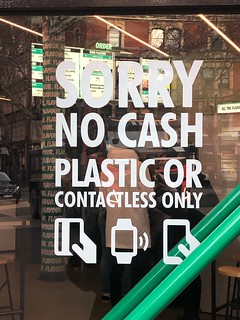
Cashless in London

So here’s a normal young person, all of her money is in the bank and she never goes to ATMs, so imagine her further horror of having to use an ATM on site to get cash which then charged her £1.50 to get her own money. Even more punishing was the fact she had to go back to the ATM again for more cash so yet another £1.50 charge!!!
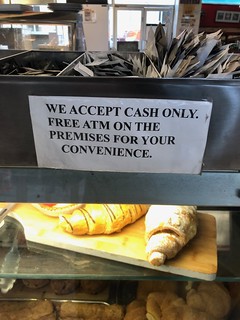
Cash Only in London

The question she asked over and over again during her stay was why in this day and age would such a large complex be cash only? Doesn't anyone there have an iZettle or a PayPal account? That doesn't seem like much of an investment when surely with so much cash around it could mean some staff creaming it off? A temptation surely. In this situation cash is expensive for the individual but it is also expensive for the organisation as a whole! Especially when you remember that cash has a lot of other hidden costs: armoured cars taking money to banks, the extra hour for workers to reconcile the till, robberies.

There’s no excuse for making people use cash in 2019. 


Comments

Popular posts from this blog

new survey results from USA Technologies (USAT) suggest. The payments technology company, which enables electronic payments for self-service machines, compared consumer spending activity at 35 of its vending machines in urban areas with a high concentration of iPhone users between week one and week four of the installation of new digital signage promoting Apple Pay. Consumers made more contactless purchases: The vending machine providers saw an average contactless transaction revenue increase of 89%, implying that consumers are making more mobile payments. This was likely driven by the clear advertisement of Apple Pay. Total transactions increased: Consumers made more purchases overall. This was probably driven by an uptick in mobile payments, given the major increase in contactless transaction revenue. And the vending machines may have attracted many first-time users who were drawn in by the digital advertising of Apple Pay. Boosting awareness is key to unlocking pent-up demand amon...

David | LinkedIn

Alex Todd rather kindly called this a “most lucid explanation of digital identity management” I would highly recommend this presentation to anyone interested in understanding prospective blockchain based identity architectures From David | LinkedIn This is very kind, but as I said in the link, this is thinking out loud and far from a fully-developed solution. We’re working on parts of this for different clients and I can see that there is something there - a genuinely new way of solving some old problems - but it’s early days.

Financial Cryptography: Corda Day - a new force

Forum friend Ian Grigg, who I always take very seriously indeed on any such topic, wrote about Corda on his blog and concluded with a powerful statement. Bitcoin told the users it wanted an unstoppable currency - sure, works for a small group but not for the mass market. Ethereum told their users they need an unstoppable machine - which worked how spectacularly with the DAO? Not. What. We. Wanted. Corda is the only game in town because it's the only one that asked the users. It's that simple. From Financial Cryptography: Corda Day - a new force xxx It seems to me, however, what Ian is pointing to as the greatest strength of their approach is also the greatest weakness. A staple feature of unimaginative management consultants presentations about innovation is some variation on the statement by Henry Ford that if you had asked users what they wanted, they would have asked for faster horses coupled with some variation on the statement by Steve jobs that it was pointless ask...